
Chance meetings with ex Soviet Fighter Jets pilots

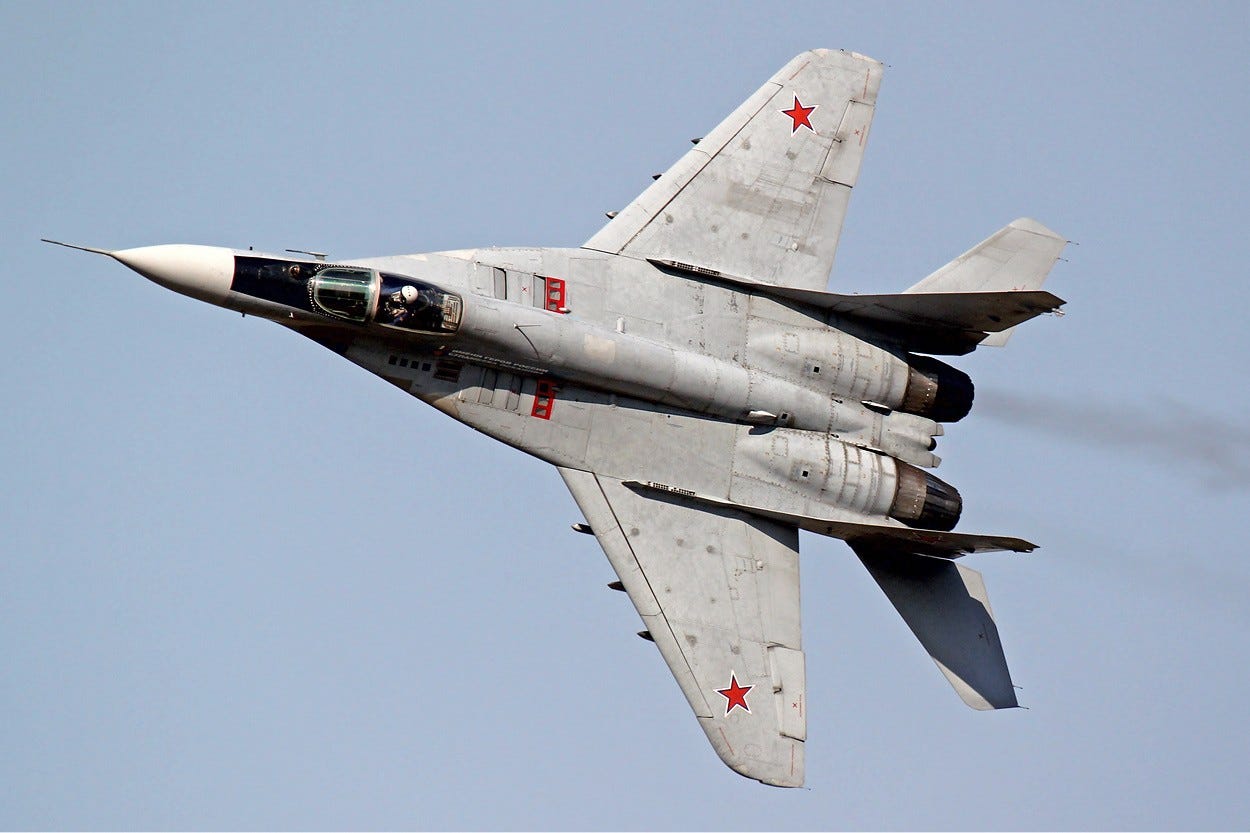
One of the coolest things about being a ship agent is that you get to meet people from all over the world and everyone has a story. A few weeks ago, I was taking a crewman to the airport in Philly, a good man on his way home and to a well deserved vacation, and we started talking about a few curious details I noticed about his place of birth, his current nationality and where he lives. I will paraphrase our conversation here, as I remember it.
“So, Sergiy, I see you were born in Berlin, Germany, how come you ended up Ukrainian?,” I asked, not connecting his date of birth in 1972 with history.
“Oh, I was born in East Berlin, in communist Germany, where my father was a fighter jet pilot in the Soviet Air Force and he was later deployed back to Ukraine,” Sergiy replied.
“I’m old enough to have have guessed that!” I said, “I suppose it should be a common occurrence for kids born in East Europe before the collapse of the Soviet Union. So, how come you ended up a seaman and a deck officer at that?”
“Actually, this is my second career, just like my father and my grandfather before him, I was also a fighter jet pilot in the Soviet Union. I used to fly Mig-29s,” Sergiy replied.
After a bit too obvious double take, I said: “That’s fantastic! What happened?”
“Well, after the Soviet Union collapsed, they kept most pilots around but we were no longer privileged or needed all that much. With the new free market model and not much in the way of federal funds, the new Russia was paying their pilots the equivalent of $150.00 a month, so I left the Air Force in 1993,” Sergiy said.
“Wow, that’s sad and shameful,” I said. “No wonder! But that doesn’t explain the career change! You obviously went back to school for something completely different. Why didn’t you become a civilian commercial pilot? In the U.S.A., lots of former Air Force pilots become commercial pilots after leaving the force and they get paid really well!”
“Indeed, lots of them do but few them are former fighter jet pilots, I bet.” He said.
“Why?” I asked.
“Because, at least in Russia and the other former Soviet republics, former fighter jet pilots are considered to be too crazy to transition into commercial service…,” Sergiy said, “we love to do things in the air that would be dangerous, extremely difficult or impossible to do with commercial airliners. That’s the way we were trained; to react to little stimuli in our immediate environment and not all such pilots can be trained down for commercial service. I couldn’t find a job. No one would hire me as a commercial pilot.”
Once I started that conversation, Sergiy was taken back to those years as a Mig-29 pilot. Accounts of taking off almost vertically in less than 200 feet of runway with your back glued to the seat by some crazy g-force number. Of flying inside the clouds and looking back to twin vapor vortices behind the plane. Of flying over the speed of sound. Of all those crazy maneuvers one sees in movies like Top Gun. Training exercises with live missiles and ammunition… All of it with the hand gestures and jet engine sounds you’d expect from a kid playing with a toy model of a Mig-29. Sergiy misses his flying days. Once you taste that expansive freedom where most, if not all of your time, is combat free and free to play, who wouldn’t?